

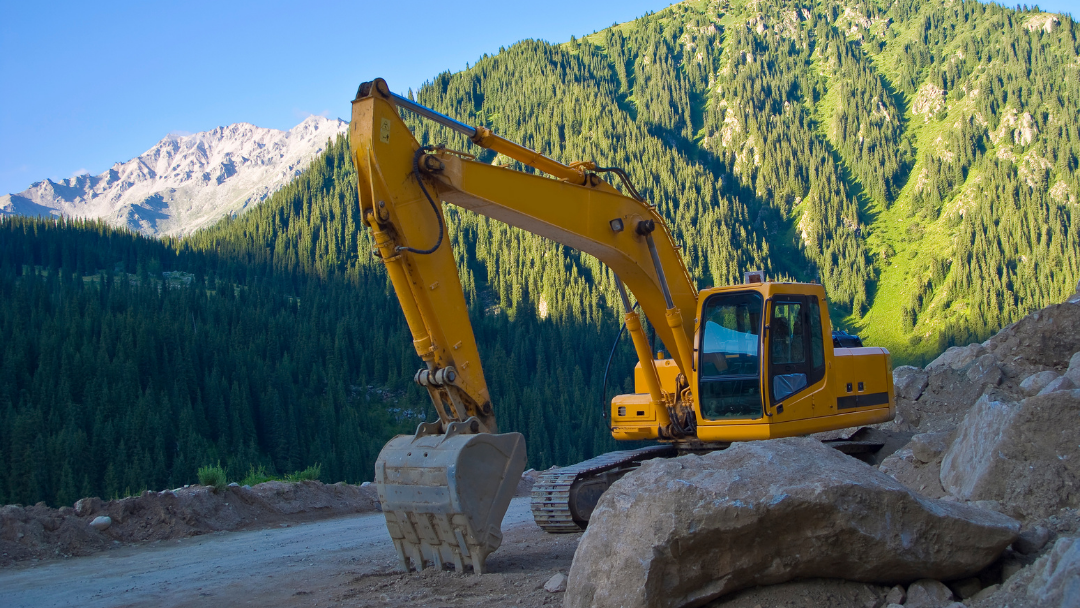
An access road and an industrial site may need very different groundwork. Both, however, can involve heavy civil construction. Across Northwest BC, projects can involve clearing land, excavating material, and preparing areas where roads or other infrastructure will be built.
On a new access road, the route has to be cleared before crews can shape the ground and prepare it for the road layers. An industrial site presents different requirements: excavation may be needed to reach the specified levels or make room for foundations. The work changes with the type of infrastructure development being undertaken, even when both projects begin with ground preparation.
Road Construction Creates Access for Infrastructure Projects
Road construction begins with preparing the ground where the route will run. Once the area is cleared, crews check the material beneath the planned road and remove what cannot provide a suitable base. The subgrade must be prepared before the supporting layers are placed, since weak or uneven ground can affect the road under traffic.
Provincial highway work in BC follows applicable construction requirements set out in the Standard Specifications for Highway Construction. Individual contracts can also include provisions for conditions specific to the project.
An existing resource road may already provide access but still need work before it can accommodate the planned traffic. A narrow stretch may need to be widened. Elsewhere, crews may have to repair the road surface or replace material beneath it that has deteriorated. The work depends on the condition of the route and what it needs to support.
For infrastructure projects in Northwest BC, the condition of an access road affects equipment movement and material deliveries, two of the broader civil construction considerations project teams need to address.
Excavation and Earthworks Prepare Sites for Construction
Excavation removes soil, rock, or other material from areas where construction needs to take place. The depth and extent of the work depend on the planned structure and the ground levels specified for the site. Material that cannot remain in place must be removed before the next stage begins.
A site with uneven ground may need both cutting and filling. Crews remove material from higher ground and use suitable fill to raise the lower sections. As part of earthworks, fill is placed to the required levels and compacted according to the project specifications.
Foundation excavations have to match the dimensions shown in the construction plans. A trench that's too shallow or an excavated area that's too narrow needs correction before the planned work can continue. The same attention to specified dimensions applies to heavy civil construction work on industrial facilities and other infrastructure projects.
Drainage and Ground Stability in Road Construction
Water needs a clear path away from roads and other constructed areas. Runoff left along a road can soften the ground beneath its edges or collect in low sections. Roadside ditches collect runoff and channel it away. Culverts let water pass beneath the road. Both are part of the site's drainage system.
If a culvert cannot carry the expected flow, water may back up near the road. Placement matters too, particularly where water needs to pass beneath an embankment. Proper drainage reduces water-related problems, although it does not replace the ground assessment or structural measures a project may require.
BC's Highway Drainage and Culverts reference page provides additional technical resources for readers examining culvert design and drainage requirements for applicable highway projects.
For projects in Northwest BC, Boney Creek Development Ltd. provides steel culvert supply, including sourcing and delivery. The required culvert specifications need to be established before materials are ordered, so the supplied components match the drainage work planned for the site.
Heavy Civil Construction Supports Larger Infrastructure Projects
A road upgrade may be needed before crews can move equipment and materials into a larger construction site. That makes access work an important part of heavy civil construction, particularly on transportation and industrial projects where several activities share the same route.
Lemare's 2024 PRGT road upgrades covered 18 kilometers of resource roads in a 50-day construction window. Bridge installation and quarry development were also part of the work. Lemare also blasted and hauled 67,000 cubic meters of aggregate from multiple quarries for the road improvements.
These civil construction activities had to support the same road upgrade program, even though they involved different types of work.
Construction Partnerships and Specialized Expertise
Roadwork, excavation, bridge installation, and foundation work call for different equipment and technical experience. The combination of services needed depends on the requirements of each project.
As the economic development arm of the Laxgalts’ap Village Government, Boney Creek Development works through construction partnerships that connect regional priorities with specialized contractors.
The Lemare construction partnership brings expertise in resource roads, excavation, drilling, and blasting. These services are relevant where projects involve difficult terrain or extensive earthmoving. The Surespan partnership adds bridge construction and piling capabilities for projects requiring structural work.
Boney Creek's role is to develop relationships that connect those capabilities with infrastructure opportunities in Northwest BC and support economic development within Nisga’a Territory.
From Groundwork to Completed Infrastructure
A completed road or industrial facility depends on work that may no longer be visible once construction finishes. The road surface might be new, but its performance still depends on the prepared ground beneath it and how water drains away.
In Northwest BC, heavy civil construction covers projects with very different site conditions and access needs. Road upgrades, excavation, and drainage work each address a specific part of preparing infrastructure for its intended use.
Planning a construction project in Northwest BC? Work with us to explore potential construction partnerships and infrastructure opportunities in the region.